
What then are we to say about these things? If God is for us, who is against us? He who did not withhold his own Son, but gave him up for all of us, will he not with him also give us everything else? Who will bring any charge against God’s elect? It is God who justifies. Who is to condemn? It is Christ Jesus, who died, yes, who was raised, who is at the right hand of God, who indeed intercedes for us.
Romans 8:31–34
What kings, leaders of nations, philosophers, artists, founders of religions, and teachers of morals tried and failed to do—this now happens through a newborn child. A child is placed at the center of world history, putting to shame the greatest human efforts and achievements. This child is born of human beings but given by God (Isa. 9:6). This is the mystery of the world’s salvation; everything from the past and everything in the future is contained here.
The infinite mercy of the all-powerful God comes down to us in the form of a child—his Son. That this child is born for us, that this Son is given to us, that this human child and Son of God belongs to me, that I know him, have him, love him, that I am his and he is mine—this is what my life now depends on. A child holds our life in his hands.
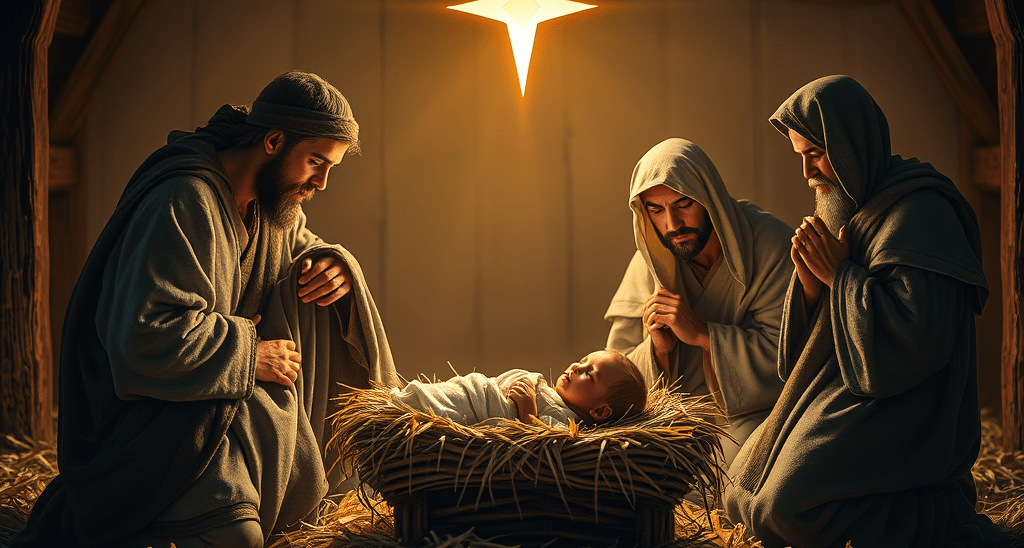
How shall we deal with such a child? Have our hands, soiled with daily toil, become too hard and too proud to fold in prayer at the sight of this child? Has our head become too full of serious thoughts … that we cannot bow our head in humility at the wonder of this child? Can we not forget all our stress and struggles, our sense of importance, and for once worship the child, as did the shepherds and the wise men from the East, bowing before the divine child in the manger like children?
“The Government upon the Shoulders of the Child,” Christmas 1940
Bonhoeffer, Dietrich. God Is in the Manger : Reflections on Advent and Christmas. Louisville, Presbyterian Publishing Corporation, 2012.
 LifeBridge International Church