
Advent: December 17 – Christmas, Fulfilled Promise

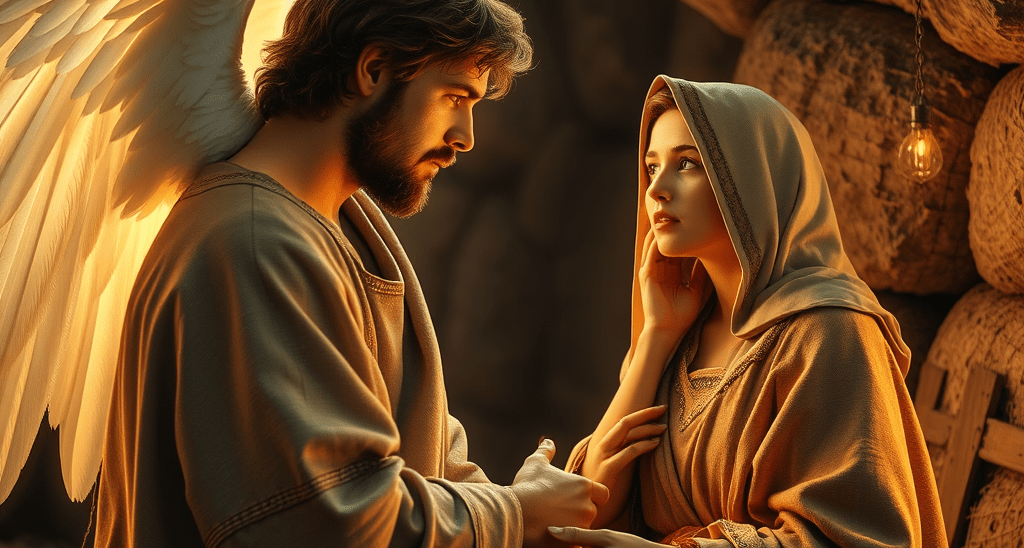
In the sixth month the angel Gabriel was sent by God to a town in Galilee called Nazareth, to a virgin engaged to a man whose name was Joseph, of the house of David. The virgin’s name was Mary. And he came to her and said, “Greetings, favored one! The Lord is with you.” But she was much perplexed by his words and pondered what sort of greeting this might be. The angel said to her, “Do not be afraid, Mary, for you have found favor with God. And now, you will conceive in your womb and bear a son, and you will name him Jesus. He will be great, and will be called the Son of the Most High, and the Lord God will give to him the throne of his ancestor David. He will reign over the house of Jacob forever, and of his kingdom there will be no end.”
Luke 1:26–33

Moses died on the mountain where he was allowed to see the promised land from a distance (Deut. 32:48–52). When the Bible speaks about God’s promises, it is a matter of life and death. The message in this ancient story is clear: anyone who has seen God must die; the sinner cannot survive before God’s promise.

Let’s think about what this means for us as Christmas approaches. The greatest promise of God—a promise much greater than the promised land—is about to be fulfilled at Christmas.

The Bible repeatedly tells us that this great miracle happened as an act of God, without any human effort. What happened? God saw the suffering of the world and came himself to help. He came to us—not as someone powerful, but as one who shared in the lowliness of humanity, where there is sin, weakness, suffering, and misery. That is where God goes, and that is where anyone can find him.

This message spreads through the world year after year. And this year, it comes to us once again.

We all come with different personal feelings to the Christmas festival. One comes with pure joy as he looks forward to this day of rejoicing, of friendships renewed, and of love.… Others look for a moment of peace under the Christmas tree, peace from the pressures of daily work.… Others again approach Christmas with great apprehension. It will be no festival of joy to them. Personal sorrow is painful especially on this day for those whose loneliness is deepened at Christmastime.… And despite it all, Christmas comes. Whether we wish it or not, whether we are sure or not, we must hear the words once again: Christ the Savior is here! The world that Christ comes to save is our fallen and lost world. None other.

Sermon to a German-speaking church in Havana, Cuba, December 21, 1930

Bonhoeffer, Dietrich. God Is in the Manger : Reflections on Advent and Christmas. Louisville, Presbyterian Publishing Corporation, 2012.

Advent: December 16 – Human Beings Become Human Because God Became Human

When I was a child, I spoke like a child, I thought like a child, I reasoned like a child; when I became an adult, I put an end to childish ways. For now we see in a mirror, dimly, but then we will see face to face. Now I know only in part; then I will know fully, even as I have been fully known.
1 Corinthians 13:11–12

The image of Jesus Christ is formed within people. People do not develop a form of their own, separate from him. Instead, the image of Jesus Christ shapes them and sustains this new form within them. This is not about copying or repeating his image exactly, but about people discovering their own true form through him.

This transformation does not turn people into something foreign to them or into the form of God. Instead, it shapes them into their own form—the one that truly belongs to them and is part of their very nature. People become fully human because God became human, but they do not become God. This change is not something people could create for themselves. Only God, by taking on human form, makes it possible for people to become what they were meant to be—fully human—without becoming God.

In Christ, the image of humanity before God was made new. This renewal was not about where people live, their time in history, their race, culture, religion, or personal preferences. Instead, it was about the essence of human life itself. In Christ, humanity saw its true image and its greatest hope. What happened to Christ happened to all humanity.

The whole Christian story is strange. Frederick Buechner describes the Incarnation as “a kind of vast joke whereby the creator of the ends of the earth comes among us in diapers.” He concludes, “Until we too have taken the idea of the God-man seriously enough to be scandalized by it, we have not taken it as seriously as it demands to be taken.”
But we have taken the idea as seriously as a child can. America is far from spiritually monolithic, but the vast backdrop of our culture is Christian, and for most of us it is the earliest faith we know. The “idea of the God-man” is not strange or scandalous, because it first swam in milk and butter on the top of our oatmeal decades ago. At that age, many things were strange, though most were more immediately palpable. A God-filled baby in a pile of straw was a pleasant image, but somewhat theoretical compared with the heart-stopping exhilaration of a visit from Santa Claus. The way a thunderstorm ripped the night sky, the hurtling power of the automobile Daddy drove so bravely, the rapture of ice cream—how could the distant Incarnation compete with those?
We grew up with the Jesus story, until we outgrew it. The last day we walked out of Sunday School may be the last day we seriously engaged this faith.

Frederica Mathewes-Green,
At the Corner of East and Now

Bonhoeffer, Dietrich. God Is in the Manger : Reflections on Advent and Christmas. Louisville, Presbyterian Publishing Corporation, 2012.

Advent: December 15 – God Becomes Human

In the beginning was the Word, and the Word was with God, and the Word was God. He was in the beginning with God. All things came into being through him, and without him not one thing came into being. What has come into being in him was life, and the life was the light of all people. The light shines in the darkness, and the darkness did not overcome it.
John 1:1–5

God becomes human—truly human. While we often try to rise above our human nature, to leave it behind, God chooses to become human. This shows us that God wants us to embrace being human—fully and completely.

We often separate people into groups like godly and ungodly, good and evil, noble and ordinary. But God does not do this. God loves real human beings, all of them, without making distinctions. God stands with real people and the real world, even against those who accuse them.

However, it is not enough to simply say that God cares for human beings. This truth is based on something much deeper and more profound. When Jesus Christ was conceived and born, God became human in a physical, bodily way. Through this act, God showed his love for humanity in the clearest and most certain way possible. He became one of us. He shared in our nature, our essence, our guilt, and our suffering.

Out of love for humanity, God became human. He did not choose the most perfect person to join with. Instead, he took on human nature just as it is.

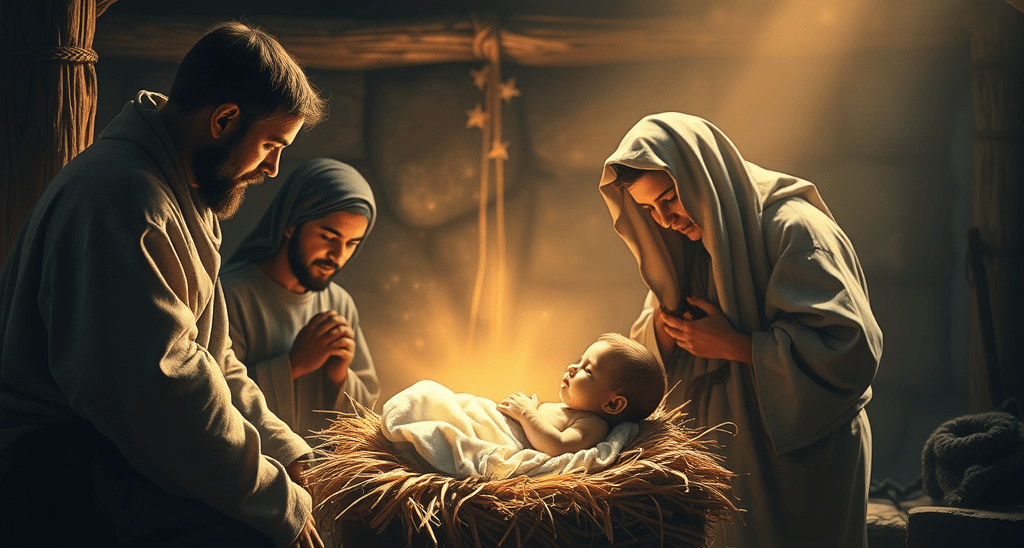
This is about the birth of a child, not of the astonishing work of a strong man, not of the bold discovery of a wise man, not of the pious work of a saint. It really is beyond all our understanding: the birth of a child shall bring about the great change, shall bring to all mankind salvation and deliverance.

“The Government upon the Shoulders of a Child,” Christmas 1940

Bonhoeffer, Dietrich. God Is in the Manger : Reflections on Advent and Christmas. Louisville, Presbyterian Publishing Corporation, 2012.

Advent: December 14 – God Does Not Want to Frighten People

From that time Jesus began to proclaim, “Repent, for the kingdom of heaven has come near.”
Matthew 4:17

The Bible does not want to make us afraid. God does not want anyone to live in fear—not even of the final judgment. Instead, God wants people to understand everything about life and its true purpose. He reveals these things to us now so that we can live openly and honestly, aware of the reality of the last judgment.

God tells us these truths for one reason: to guide us to Jesus Christ. He wants us to turn away from wrong paths and seek Jesus. God does not intend to scare us. When he speaks of judgment, it is only to make us reach more eagerly for his promise of grace. It is to help us realize that we cannot stand before him on our own strength, that on our own, we would be lost. But even so, God does not want us to die—he wants us to live.

Christ is the one who judges, and his judgment is full of grace, forgiveness, and love. Whoever holds on to him is already free.

Repentance means turning away from one’s own work to the mercy of God. The whole Bible calls to us and cheers us: Turn back, turn back! Return—where to? To the everlasting grace of God, who does not leave us.… God will be merciful—so come, judgment day! Lord Jesus, make us ready. We rejoice. Amen.

Bonhoeffer’s sermon for Repentance
Sunday, November 19, 1933

Bonhoeffer, Dietrich. God Is in the Manger : Reflections on Advent and Christmas. Louisville, Presbyterian Publishing Corporation, 2012.

Advent: December 13 – Overcoming Fear

And when he got into the boat, his disciples followed him. A windstorm arose on the sea, so great that the boat was being swamped by the waves; but he was asleep. And they went and woke him up, saying, “Lord, save us! We are perishing!” And he said to them, “Why are you afraid, you of little faith?” Then he got up and rebuked the winds and the sea; and there was a dead calm. They were amazed, saying, “What sort of man is this, that even the winds and the sea obey him?”
Matthew 8:23–27

Fear robs human beings of their true humanity. But we are not meant to live in fear. We should not be afraid! This is what sets humans apart from the rest of creation: even in moments of hopelessness, uncertainty, and guilt, we have a hope. That hope is found in these words: Thy will be done.

We can call on the name of the One before whom all evil trembles, the One who makes fear itself afraid, who causes anxiety to shake and flee. This is the One who conquered fear, took it captive, and displayed his victory over it. He nailed fear to the cross and rendered it powerless. He is the victory cry of humanity redeemed from the fear of death—Jesus Christ, the crucified and risen Lord.

Jesus alone is the master of fear. Fear knows him as its Lord and submits to him alone. So, when you feel fear, turn to him. Think about him, focus on him, and call on his name. Pray to him and trust that he is with you, helping you. When you do this, fear will lose its hold and fade away. You will find freedom through faith in the strong and living Savior, Jesus Christ (Matt. 8:23–27).

Only when we have felt the terror of the matter, can we recognize the incomparable kindness. God comes into the very midst of evil and death, and judges the evil in us and in the world. And by judging us, God cleanses and sanctifies us, comes to us with grace and love.… God wants to always be with us, wherever we may be—in our sin, suffering, and death. We are no longer alone; God is with us.

“The Coming of Jesus in Our Midst”

Bonhoeffer, Dietrich. God Is in the Manger : Reflections on Advent and Christmas. Louisville, Presbyterian Publishing Corporation, 2012.